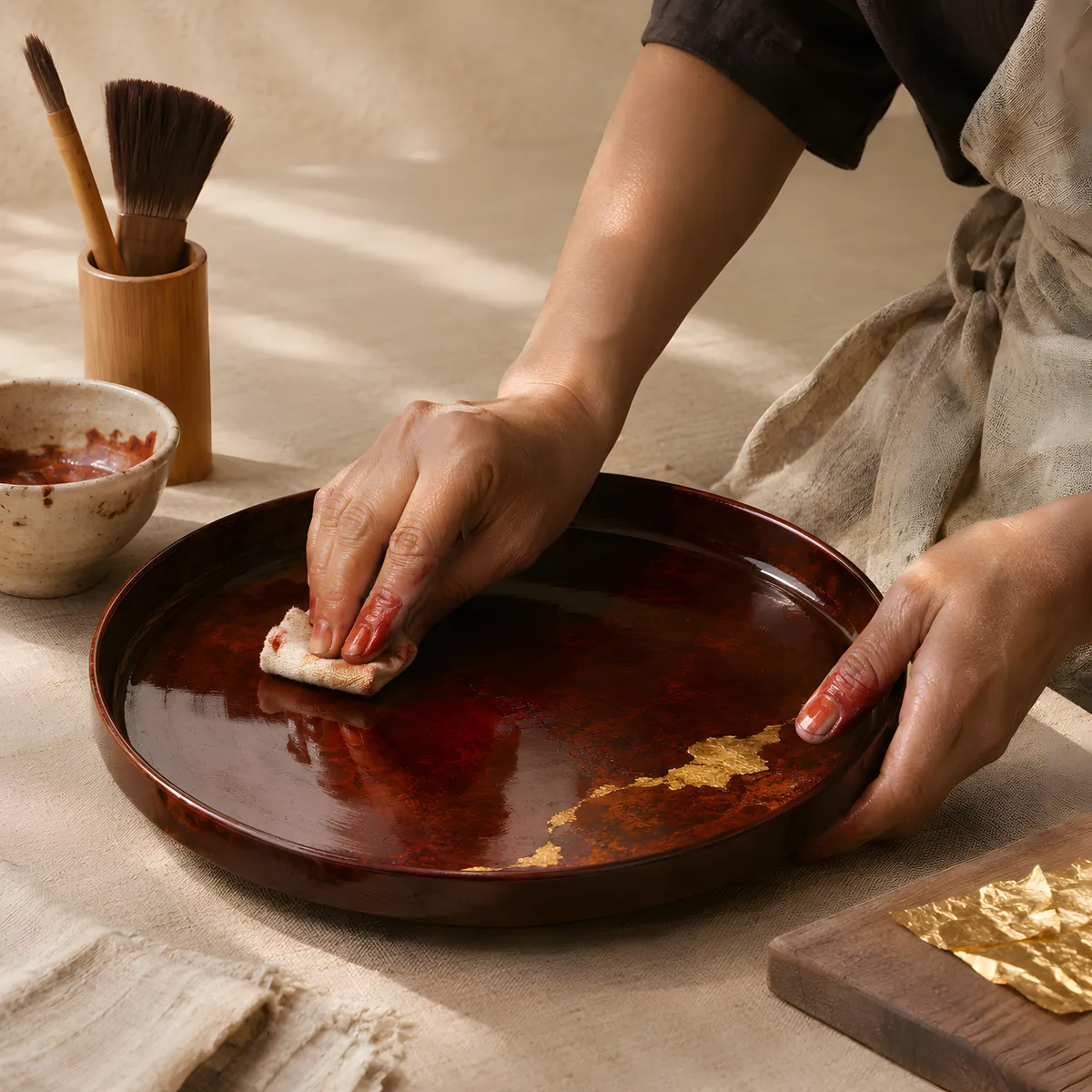
A lacquered surface can look simple from a distance. A deep red, a dark brown, a reflection of light along the edge of a tray. Move closer and the colour becomes harder to describe. It seems to sit beneath the surface rather than on top of it.
This depth is one of the qualities that makes Vietnamese sơn mài worth looking at slowly. The finished object gives little indication of how much work lies beneath what the eye can see.
What lies beneath the surface
Traditional lacquer work begins with a prepared base. Lacquer is applied in successive layers, with periods of drying and careful work between applications. Depending on the technique, pigments and other materials may be incorporated to create colour, pattern and depth.
The surface is gradually built up, then worked back through sanding and polishing. In some forms of sơn mài, abrasion reveals colours and materials that were placed beneath later layers. What appears at the end depends partly on decisions made much earlier in the process.
A change in pressure can affect the finish. So can the decision to polish a little further or to stop. This is a craft in which the maker must consider both what to add and what to reveal.
The result may have a quiet appearance, but its simplicity is earned through repeated work.
A material among materials
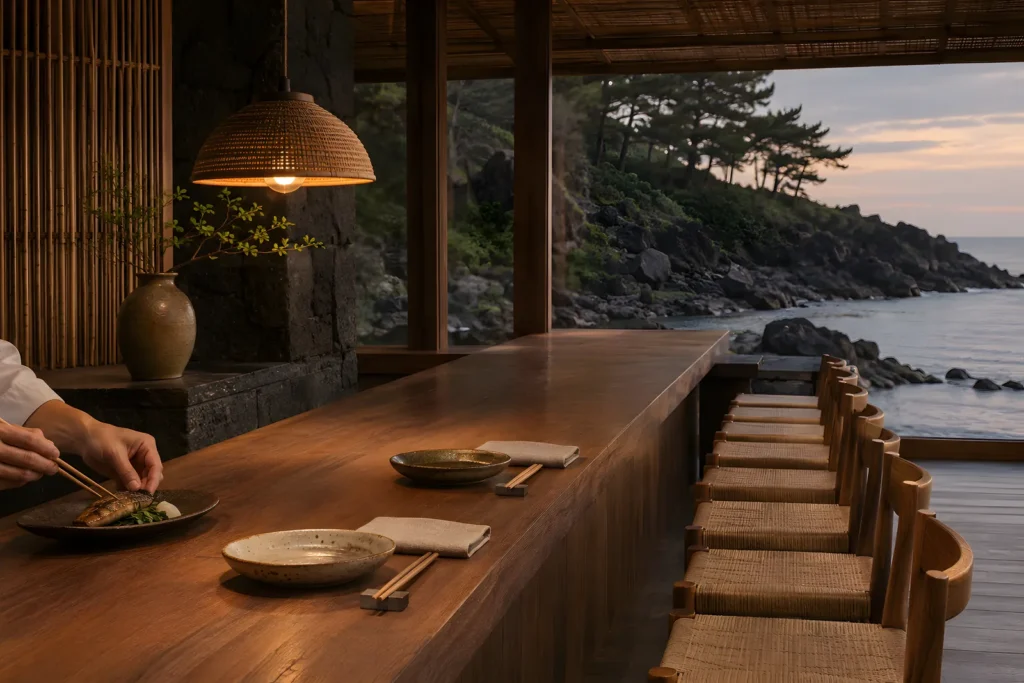
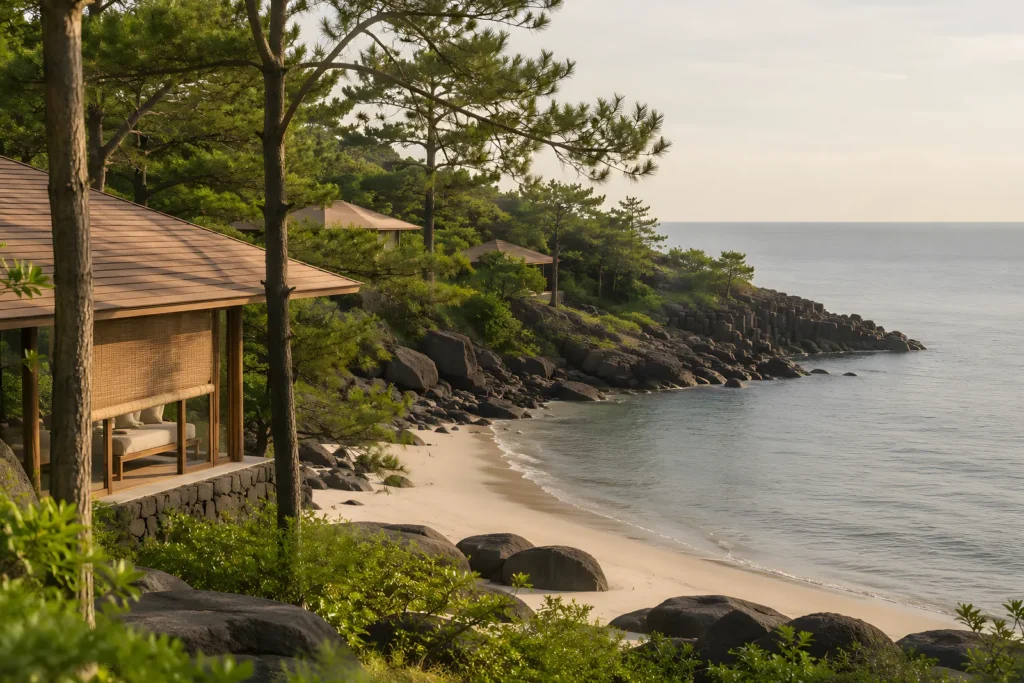
At ASAIWA, lacquer belongs alongside local basalt, bamboo, plantation grown sa moc or reclaimed timber, and Vietnamese woven cotton. These materials carry different qualities into the rooms.
Basalt has weight and an uneven surface. Timber shows its grain. Woven cotton has the texture of individual threads. Lacquer offers something different: a surface whose depth comes from layers, colour and polishing.
The materials need not resemble one another. Their relationship comes from the attention given to their preparation and use.
The imagined resort is built by Vietnamese craftspeople, and its story is told through the objects they make. A lacquered tray can express that work without requiring an elaborate explanation or an invented biography of its maker.
Two hours with lacquer
The lacquer workshop at ASAIWA lasts two hours and costs VND 1,500,000 per guest. It offers a closer encounter with sơn mài and the work involved in creating a finished surface.
Two hours cannot contain every stage of a craft that often requires repeated applications, drying and polishing. It can, however, provide time to look carefully at the material and understand why its finish cannot be hurried.
The same attention can continue afterwards, when a guest encounters a lacquered object elsewhere in the resort.
A tray remains a tray. Its purpose is ordinary. Yet the surface can hold evidence of work that is easy to overlook.
Sometimes the most useful thing a craft workshop can give us is a different way of looking at what is already in front of us.