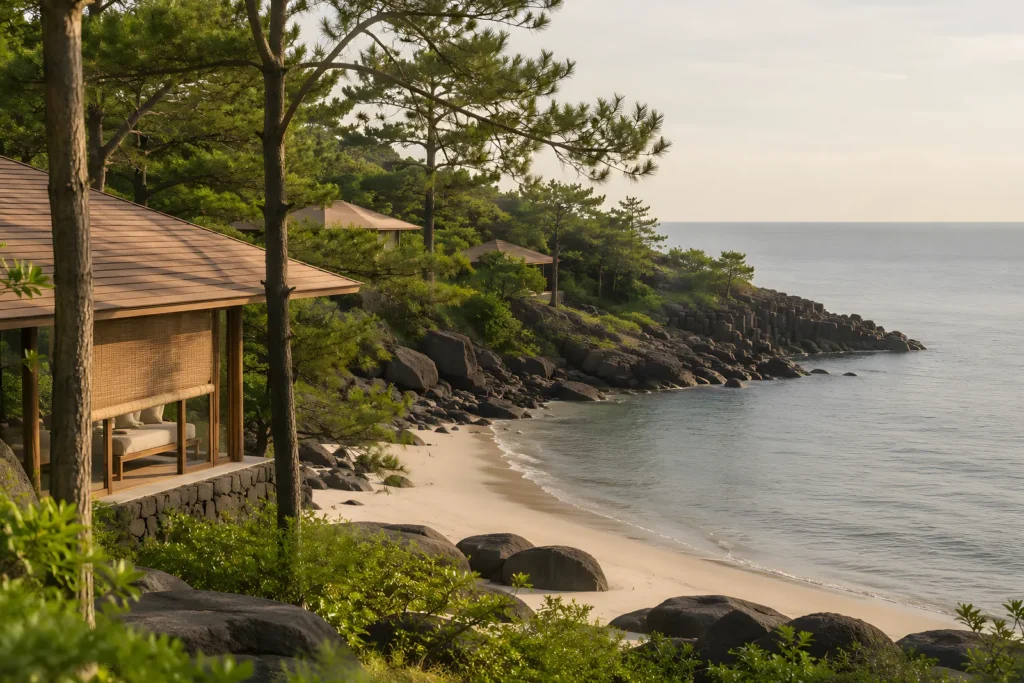
A coastal menu begins before anything reaches the kitchen. It begins with the season, the conditions at sea and what the day’s fishing can provide.
The availability of fish and seafood is never entirely separate from the weather. Wind, currents, rainfall and the movements of different species influence what can be caught and when. A fixed menu can conceal those changes. A seasonal menu has room to acknowledge them.
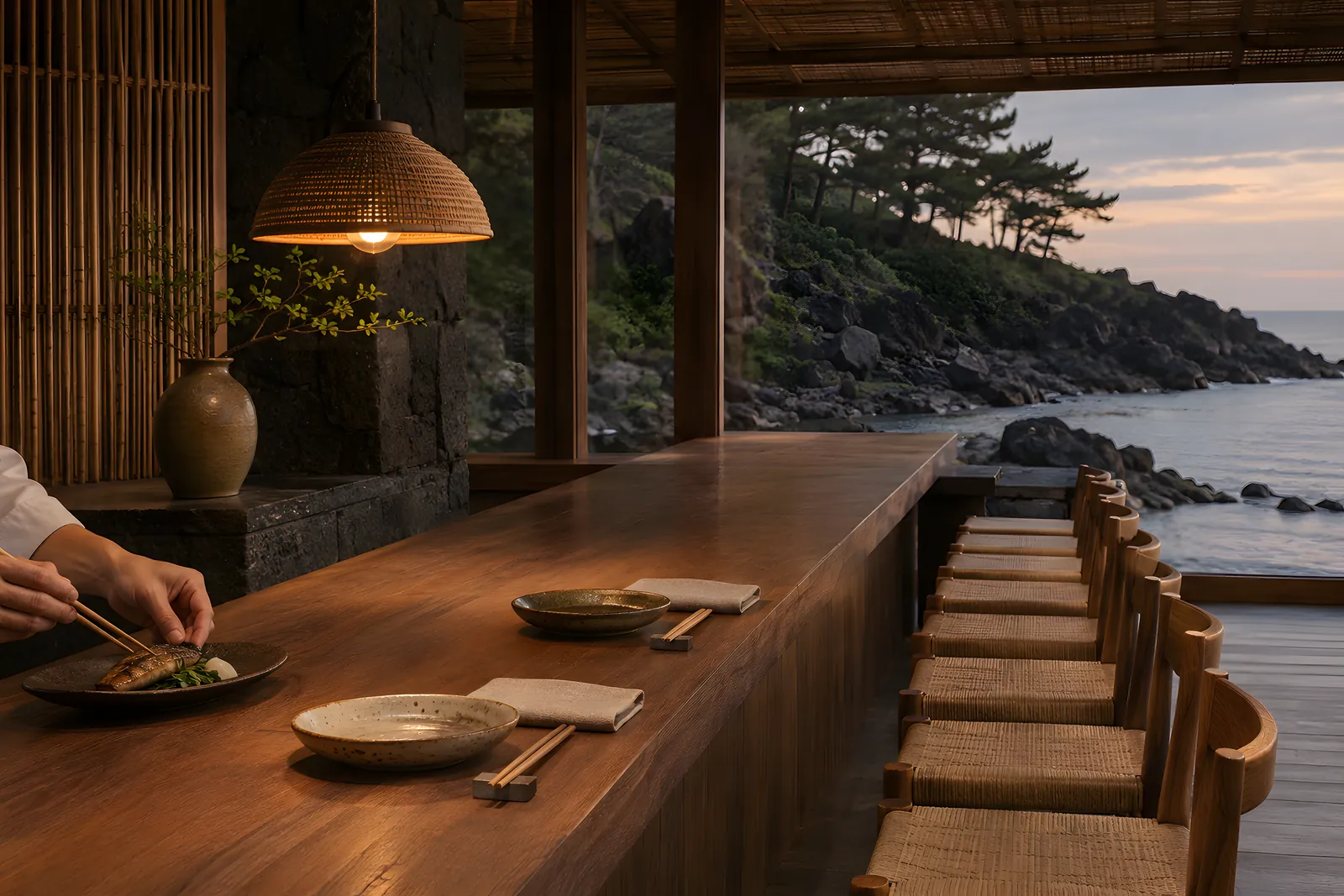
At ASAIWA, the Seasonal Dining Counter takes this relationship between food and place as its starting point.
Ten seats, one sequence
The counter has ten seats and serves dinner from 18:00 to 22:00. A seasonal set menu costs VND 3,200,000 per guest, with advance reservation required.
Its structure draws on Japanese kaiseki dining, in which a meal unfolds through a considered sequence of courses. Individual preparations can have different roles within that sequence. A lighter dish may precede something more substantial. Temperature, texture and the way ingredients are presented contribute to the progression.
At ASAIWA, the ingredients come from the Vietnamese coast. The Japanese influence lies in the organisation of the meal and the attention given to each course, rather than in an attempt to remove the food from its local setting.
The distinction matters. Vietnamese coastal ingredients have their own character. They deserve to be understood on their own terms.
A small counter also makes the sequence of a meal easier to follow. There is less distance between the preparation of food and the moment it is served.
Following the fishing calendar
On this part of Vietnam’s coast, the dry season runs broadly from January to August. Conditions during these months can bring calmer seas, although the weather and the catch still vary.
A fishing calendar is more complicated than a division between wet and dry months. Different species, fishing methods and local conditions create their own patterns. A seasonal kitchen must respond to what is available rather than assume that the same ingredients will arrive every day.
That principle gives a menu flexibility without making it arbitrary. Each course still has a place, but the ingredient occupying that place can change.
Seasonal dining is therefore as much about paying attention as it is about variety.
Beyond the evening counter
There are other ways to eat at ASAIWA.
Breakfast is served from 07:00 to 10:30, with a choice of Japanese, Vietnamese or western sets. It is included in every room rate for two guests, or four in the Two-Bedroom Residence.
Beside the pool, an open kitchen and charcoal grill serve an à la carte menu from 07:00 to 22:00.
The two dining venues offer different forms of a meal. One follows a prepared sequence at a small counter. The other leaves the choice of dishes to the guest.
Both belong to the same imagined coast, where the sea, the season and the ingredients give the kitchen something to respond to.